INDICADORES ECONÓMICOS TRM

20/01/2026

$ 3.700,05

$ 0,00

Precios de Referencia FFP - 1/2025

$ 4.175 /kg

Indicadores Precios de Referencia FEP - 11/2025

IPML $4.136.900 - IPME $3.867.039 

...

Ver más

Precio de referencia FFP – 12/2023:

Precio de referencia del aceite de palma crudo para el cálculo de la cuota del Fondo de Fomento Palmero de acuerdo con la Resolución 0536 del 29 de diciembre expedida por el Ministerio de Agricultura y Desarrollo Rural.

Indicadores precios de referencia FEP – 09/2024

  1. IPML: Indicador precio paridad de importación de referencia para el aceite de palma crudo en el mercado local del mes de septiembre de 2024. (Resolución FEP 262/ 2024)
  2. IPME: Indicador precio paridad de exportación de referencia para el aceite de palma crudo en el mercado de exportación (Zona Centro – Mercado Europa) del mes de septiembre 2024. (Resolución FEP 262/ 2024)

International

Oil Palm Growing in Colombia

Colombia is the largest producer of palm and palm kernel oils in America, and the fourth largest in the world. Palm growing is one of the most promising agricultural activities and is a hub to achieve development through agriculture.

Elaeis guineensis was introduced in Colombia in 1932, but its commercial cultivation only extended from the second half of the 20th century thanks to the government measures aimed at developing the countryside and providing the country with local palm oil.

Under the government’s plan to promote oilseeds, oil palm was planted in the Caribbean Plains, in the Middle Magdalena Valley, in the low foothills of the plain lands, and in the Colombian southwest. The individual efforts of the producers and their organization, the National Federation of Oil Palm Growers, Fedepalma, played a significant role in the development and consolidation of this agribusiness. As a result, plantations tripled during the eighties, and palm oil consolidated as the primary commodity in the country’s oilseed, oils, and fats productive chain. During the nineties, efforts were aimed at developing the competitiveness of the big palm companies and at managing industry institutions that helped palm growers prepare for the 21st century.

Palm and palm kernel oils represent 94.1% of the national production of oils and fats in the local market and about 66% of the consumption of these products. Likewise, exports have significantly increased since 1990, now representing a significant share of the Colombian agribusiness exports. Although the commissioning of biodiesel plants increased the percentage of internal consumption, external sales will increase as a result of the larger production expected in the next years due to the growing plantations.

Facts and graphs

Infografía de 'Hechos Económicos' del sector palmero colombiano, destacando su productividad global (aceite más consumido) y su versatilidad para productos alimenticios.
Economic facts: what Colombian oil palm sector has done
Infografía de la actividad de exportación del sector de aceite de palma en 2018, mostrando gráficos de producción por mercados, el ranking de exportaciones agrícolas y los principales destinos.
Export activity of the oil palm sector in 2018
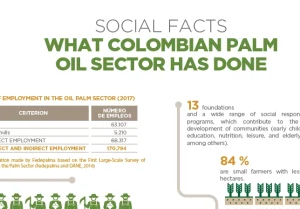
Infografía de 'Hechos Sociales' del sector palmero colombiano, detallando el empleo total de 170.794 puestos, las 13 fundaciones y el porcentaje de pequeños agricultores (84%)
Social facts: what Colombian oil palm sector has done
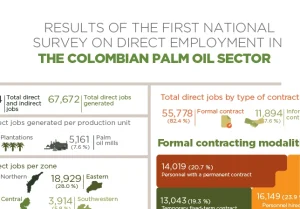
Infografía de los resultados de la Primera Encuesta Nacional de Empleo Directo en el Sector Palmero Colombiano, mostrando el total de empleos, distribución por zonas y la modalidad de contratación.
Results of the first national survey on direct employment in the Colombian oil palm sector